The ecological clock is ticking, and designers must take urgent action to mitigate the impact of global warming. Richard Hipkiss, Development Director of the MPBA explains how volumetric technology can support net zero targets.
Recognising and finding ways to meet the requirements of changing regulations and policy demands is crucial in reshaping an architectural approach to sustainability. According to the World Green Building Council, construction and buildings in use are responsible for 39% of all carbon emissions in the world. This is broken down into two elements with 11% being linked to the manufacture of materials and construction processes – our embodied carbon emissions – and 28% associated with operational emissions – those caused by heating, cooling and lighting systems when a building is in use. Our challenge is therefore two-fold.
Cutting carbon in construction
A study by academics from the University of Cambridge and Edinburgh Napier University revealed construction using precision manufactured modular systems can produce 41-45% less carbon than traditional methods. Managed by architects HTA Design for Tide Construction and Vision Modular Systems, the research shows embodied carbon produced during the design, construction and decommissioning phases of a development, is dramatically lower when modular systems are used because buildings require less volume of carbon-intensive products such as concrete and steel.
Designing for manufacture and assembly (DfMA), rather than fabrication on-site, achieves the optimal use of materials. Modular buildings are less susceptible to poorly specified products as time can be taken upfront to validate the correct specification. Any surplus materials are recycled or reused for future projects. It is widely recognised that modular methods reduce the overall construction programmes, but it is not often acknowledged this approach can reduce up to 90% of the waste generated when compared with traditional construction processes.
Circular by design, modular architecture lends itself to a closed loop of renewable materials and energy to achieve circular economy principles. The most compelling arguments for the carbon benefits of modular construction come from the reduction in time on-site and the optimisation of logistics. It is now well established that volumetric modular technology is a game changer for the construction industry – reducing build times by an impressive 50% according to data from members of the Royal Institution of Chartered Surveyors (RICS). Using cutting-edge digital design and manufacturing technology combined with the ability to carry out on-site groundworks at the same time as manufacturing modules, the efficiency benefits of this most advanced of offsite construction methods cannot be overlooked.
Reducing operational emissions
When designing a building to reduce carbon, small changes in the design and manufacturing processes can make a big difference to the operational carbon a building will use in its lifetime. The precision manufacturing involved in modular construction can support whatever energy efficient design is required by limiting heat loss caused by thermal bridging, along with far greater accuracy of construction. This allows for maximising the efficiency of the building envelope, reducing air permeability and minimising the amount of energy required to replace lost heat.
Factory manufactured modular buildings are highly accurate, well insulated and airtight, with air permeability of 1.5-3 m3 @50PA being the norm. A key advantage of modular construction is the benefits which come from working in a controlled environment. By producing buildings in a factory setting, the quality of elements such as insulation can be better assured. Predictability of in-use performance is a substantial benefit in not only achieving net zero goals but reducing primary energy requirements and in-use operational emissions during the lifetime of the building.
Client satisfaction
With its powerful combination of controlled deliverables and customisable outputs, modular construction provides cost and time efficiencies together with repeatable quality and safety – meeting key sustainability drivers and stringent Building Regulation protocols. Ensuring the regulatory ‘golden thread’ of information, with volumetric manufactured buildings all construction data can be validated and co-ordinated as part of a structured process, which helps provide accurate and reliable information for clients at the point of handover. Modern methods of construction (MMC) help ensure client satisfaction and product assurances through the certainty and quality embedded into the manufacturing process.
For more information visit: www.mpba.biz or head over to Offsite Expo Stand B01 where experts will be on hand to offer advice and support.
MPBA
The MPBA plays a key role in the connecting of sectors in the modular and portable building industry. The association collaborates with specialist technical advisors to enhance innovation in the design and manufacture of modular buildings. These can be designed and manufactured from timber or steel in any size and shape to meet individual client needs while ensuring full compliance with Building Regulations.
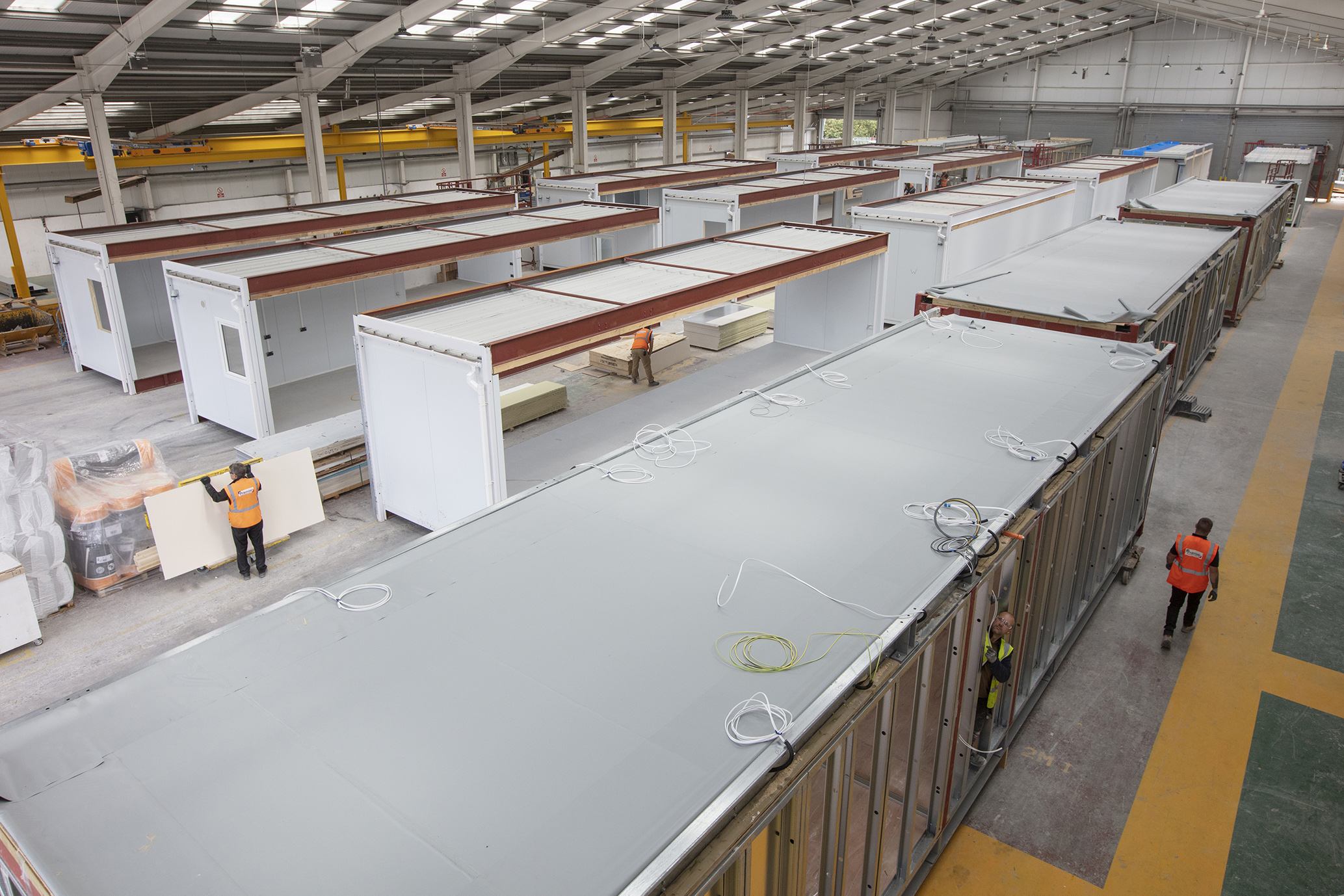
Image: Modular buildings can reduce both embodied and operational carbon levels dramatically. Courtesy Premier Modular
Source: Offsite Magazine – Issue 44