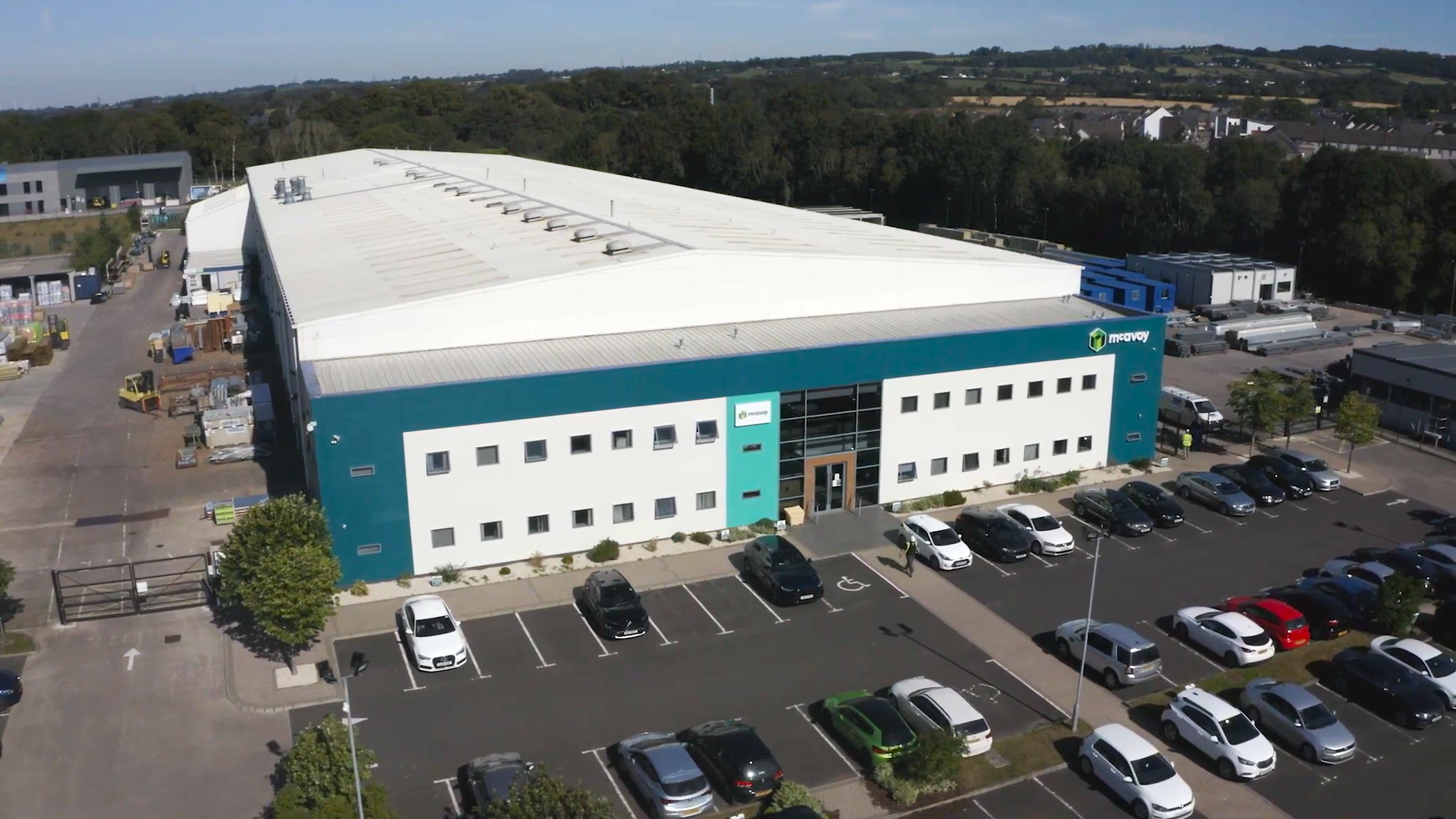
As housing demand and sustainability targets intensify, BUILDOFFSITE’s latest report argues that unlocking unused MMC factory capacity could transform housing delivery across the UK. Industry Advisor Fareita Udoh, outlines what needs to be done.
THE UK stands at a pivotal moment in its housing and climate journey. With the Future Homes Standard approaching, New Towns gearing up for delivery, and the Proud to Call It Home Inquiry setting out a vision for warm, safe, affordable homes, the country faces a simple truth: traditional construction cannot meet the scale, speed or performance required. Modern Methods of Construction (MMC) can – but only if the sector’s manufacturing capacity is stabilised and fully utilised.
A new report from BUILDOFFSITE, ‘Unlocking MMC Capacity: Delivering Future Homes’, sets out a bold, sector-led solution: a National Shared Capacity Platform designed to co-ordinate factory utilisation, unlock hidden production capacity, and transform MMC from a patchwork of pilots into a national delivery system. As the report states: “Unlocking downtime unlocks delivery. Unlocking delivery unlocks homes. Unlocking homes unlocks opportunity.”
The UK must deliver Future Homes Standardcompliant homes from 2028, accelerate regeneration, and meet net-zero construction goals. Yet MMC factories – the very infrastructure needed to deliver this – are operating at just 40–60% utilisation. This underuse is described as: “the single biggest barrier to scaling up MMC and industrialised construction.” The consequences are visible across the sector: factory closures, volatile demand, fragmented procurement, labour shortages and inconsistent planning requirements.
Missing infrastructure for a modern housing system
At the same time, the report highlights that MMC factories across the UK have: “unused capacity that could deliver thousands of additional homes each year.” A Shared Capacity Platform could potentially unlock this dormant capacity. The platform is described by industry participants as: “the missing infrastructure that turns MMC from a series of pilots into a national delivery system.” Its core functions include:
• Mapping real-time factory availability
• Matching demand to unused capacity
• Co-ordinating pipelines across regions
• Reducing insolvency risk
• Lowering unit costs
• Accelerating delivery to market.
Crucially, it supports both large manufacturers and SMEs, ensuring the benefits of industrialised construction are distributed across the supply chain. The Offsite Guide (TOG) is credited with originating and sponsoring the platform concept, convening manufacturers, clients, government partners and innovators to shape a practical, sector-led solution.
Enabling the Future Homes Standard
The Future Homes Standard demands high airtightness, low thermal bridging, heat pump integration, solar readiness and consistent fabric performance. The report is unequivocal: “Traditional construction cannot reliably deliver these at scale. MMC can – but only with stable demand.” The Shared Capacity Platform supports FHS delivery by:
• Enabling factories to invest in FHS-ready systems
• Providing standardised evidence packs to reduce planning friction
• Supporting repeatable, high-performance designs
• Offering digital assurance for compliance
• Increasing utilisation to lower costs.
This alignment between industrial capability and regulatory ambition is essential if the UK is to meet its 2028 targets.
Supporting national priorities
The Proud to Call It Home Inquiry called for clearer national direction on MMC, stronger supply-chain resilience, and consistent evidence requirements. The report positions the Shared Capacity Platform as a direct response, providing the enabling infrastructure needed to deliver warm, safe, affordable homes at scale. For New Towns, the platform becomes a national testbed. The report recommends a threesite pilot cluster – Thamesmead, Brabazon and the West Cambridge Innovation Arc – to stress-test the platform across diverse typologies, planning environments and supply chains. These pilots will demonstrate FHS compliance, SME engagement and reskilling outcomes.
MMC factories also offer structured, engineering aligned roles ideal for Armed Forces leavers, ex-manufacturing workers and young people entering technical careers.
With stable demand, factories can become ‘national reskilling hubs’ supported by the Armed Forces Covenant Fund, Career Transition Partnership and Mayoral skills budgets. The platform therefore delivers not only homes, but economic opportunity. The report calls for:
1. Government endorsement across MHCLG, Homes England, DBT, DESNZ and MOD
2. Funding to build the platform, map capacity, support early adopters and run a 12 month pilot
3. Integration into New Towns delivery
4. A cross-government funding model
5. A 12 month independent evaluation.
This is framed as a low-cost, high-impact intervention compared to traditional capital programmes. The report concludes with a clear message: the UK already has the factories, skills and technology to deliver the homes the country needs. What it lacks is co-ordination. The Shared Capacity Platform provides that missing link – turning downtime into delivery, and delivery into opportunity.