Waste remains one of the construction industry’s most persistent challenges, but as Richard Pickett, Head of Sustainability at SES illustrates, manufacturing-led design has many ways to reduce levels of discarded materials.
For decades efforts to address the issue have focused on what happens at the end of the process: recycling materials, improving segregation on-site and reducing the volume of waste sent to landfill. While these initiatives remain important, they often address the symptom rather than the cause. However, the greatest opportunity to reduce waste lies much earlier in the project lifecycle, during design development.
The most effective way to minimise waste is to prevent it from being created in the first place. But this requires a shift in thinking. It requires us to move beyond traditional construction methods and embrace a manufacturing-led approach that considers how systems will be produced, assembled, transported, installed and maintained from the outset.
Optimise systems
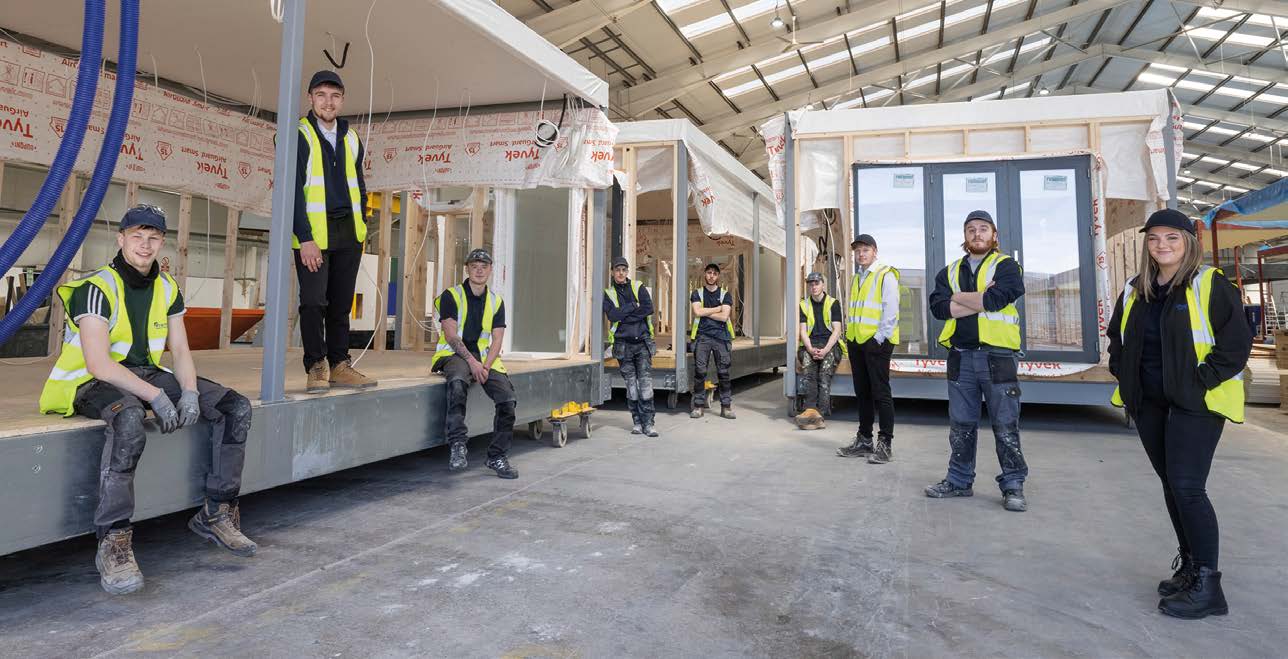
One of the clearest examples of this mindset change can be seen in building services. At SES, this approach is supported by SES Manufacturing, our offsite manufacturing capability, which helps project teams optimise systems for manufacture, assembly and installation from the earliest stages.
Designing for manufacture and assembly (DfMA) is not a new concept, but its role in helping clients achieve sustainability, quality and productivity objectives has never been more relevant. This is particularly true for building services, where complex interfaces, extensive coordination requirements and a high volume of individual components have traditionally led to waste, rework and inefficiencies on site. By integrating manufacturing expertise into the design process early, projects can eliminate many of these challenges before they become embedded in delivery programmes.
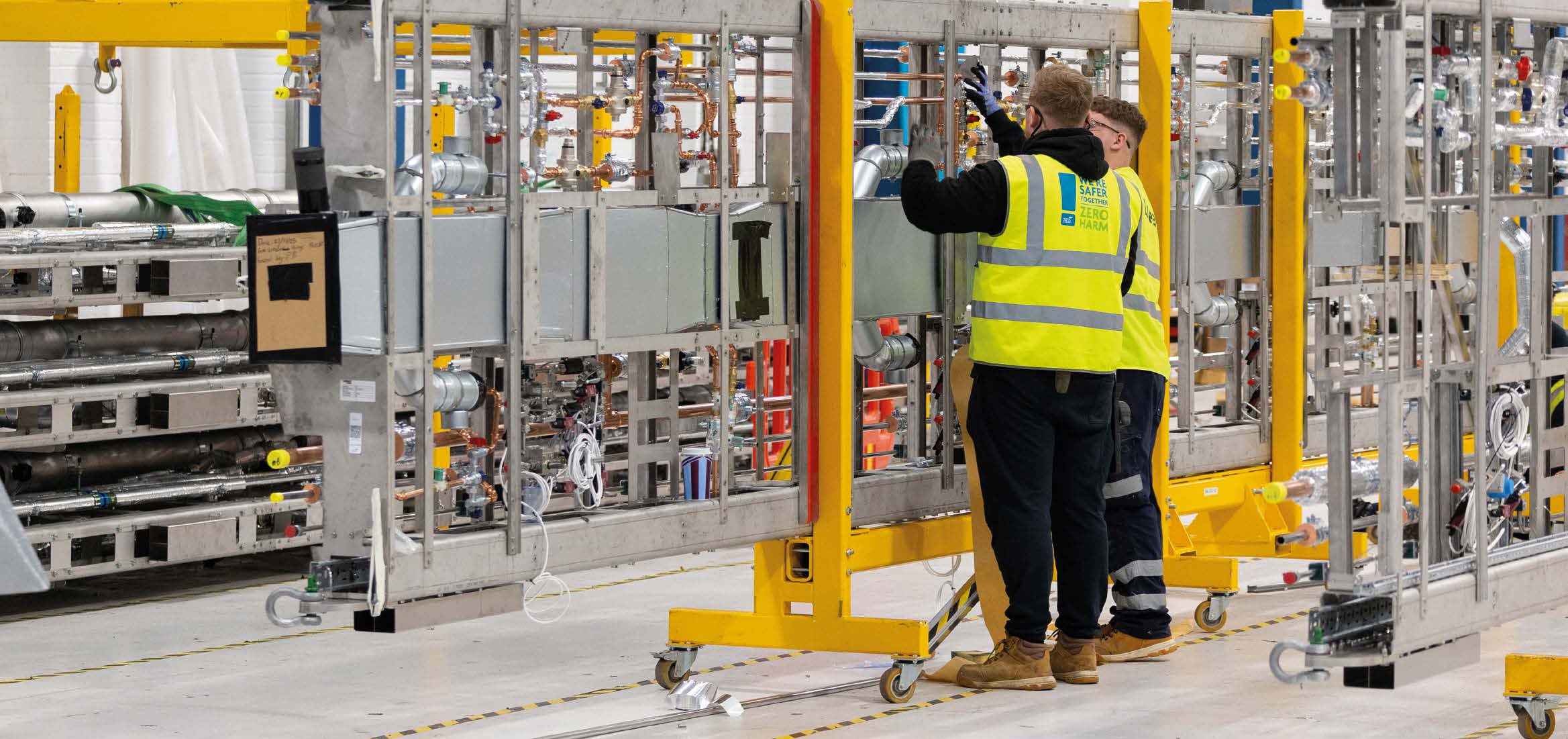
The principle is straightforward. When MEP systems are designed with manufacturing in mind, components can be standardised, material requirements accurately calculated and assemblies optimised for factory production. Multi-service modules, corridor service racks, plant skids and prefabricated utility assemblies can be manufactured in controlled environments and delivered to site ready for installation. As a result, projects avoid the over-ordering, reworking and site-based modifications that traditionally generate significant volumes of waste.
Manufacturing environments also provide far greater control over material utilisation. In a factory setting, excess materials can be returned to stock, tracked and reused on future projects, helping keep resources in productive use for longer.
Resource management
At SES Manufacturing, this approach contributed to 177 tonnes of potential waste being recycled last year alone, demonstrating how controlled manufacturing environments can support more effective resource management. Traditional building services installation often creates waste through correction. Pipework that requires rerouting, containment systems that clash with structural elements, duplicated installations or late-stage design changes can result in materials being cut out, discarded and replaced. By contrast, manufacturing-led design enables these issues to be identified, coordinated and resolved digitally before production begins.
This enhanced co-ordination is one of the strongest arguments for earlier engagement. Digital workflows allow project teams to model and verify solutions, ensuring building services systems are designed for efficient manufacture and straightforward installation. Better coordination means fewer surprises on site, fewer changes and ultimately less waste.
Similarly, logistics can be designed to support circular principles. Offsite-manufactured MEP assemblies can be delivered to site in sequence using reusable transport frames, carriers and protective systems that replace single-use pallets and packaging materials. This reduces waste throughout the supply chain while ensuring components arrive organised, protected and ready for installation. Transportation systems can then be returned and reused multiple times across different projects.
The benefits extend beyond waste reduction. In 2025, SES Manufacturing removed more than 309,000 site-based labour hours through offsite manufacture, reducing site activity, travel requirements and associated carbon emissions while improving productivity, site safety and delivery certainty. Ultimately, designing out waste is about much more than waste management. It is about creating a smarter, more efficient project delivery model that considers the entire lifecycle of a building from the earliest design decisions onwards.
Waste prevention
The construction industry has long recognised the importance of waste reduction. The next step is recognising that the most effective solution is not managing waste better but preventing it from being created at all.
By integrating manufacturing expertise into design from the outset, projects can improve quality, reduce defects, increase material efficiency, lower embodied carbon and support the transition towards a more circular built environment. This sits alongside wider sustainability initiatives across SES, including aligning procurement with ISO 20400, increasing the proportion of supply chain emissions covered by science-based targets from 11% to 48% through a major supplier engagement programme, and operating diesel-free sites following a successful trial with Sunbelt. These initiatives demonstrate that reducing waste and carbon requires action across design, manufacturing, procurement and project delivery.
For the building services sector, offsite manufacturing provides one of the most compelling demonstrations of what manufacturing-led design can achieve. Through the early integration of offsite-manufactured MEP solutions, projects can achieve greater certainty, reduce waste and carbon, improve quality, and deliver building services infrastructure that is better aligned with the principles of modern, sustainable construction.