With the volumetric modular housebuilding industry under heightened scrutiny, Richard Hipkiss, Development Director of the Modular and Portable Building Association (MPBA), considers why the outlook in mature commercial markets is on a different trajectory.
Vast investment is required to set up advanced manufacturing facilities and production lines work best when demand is steady, and utilisation is high. But as we all know, construction is an unpredictable business – particularly in the housing sector, as we are currently witnessing.
The underlying challenges of the housing shortage are much more complex and political than simply finding a quicker way to build. Manufacturing facilities require a substantial investment of time and money to set up and need a constant throughput of work to provide a return on that investment. The stop start nature of residential construction is not conducive to keeping a factory running at capacity all the time.
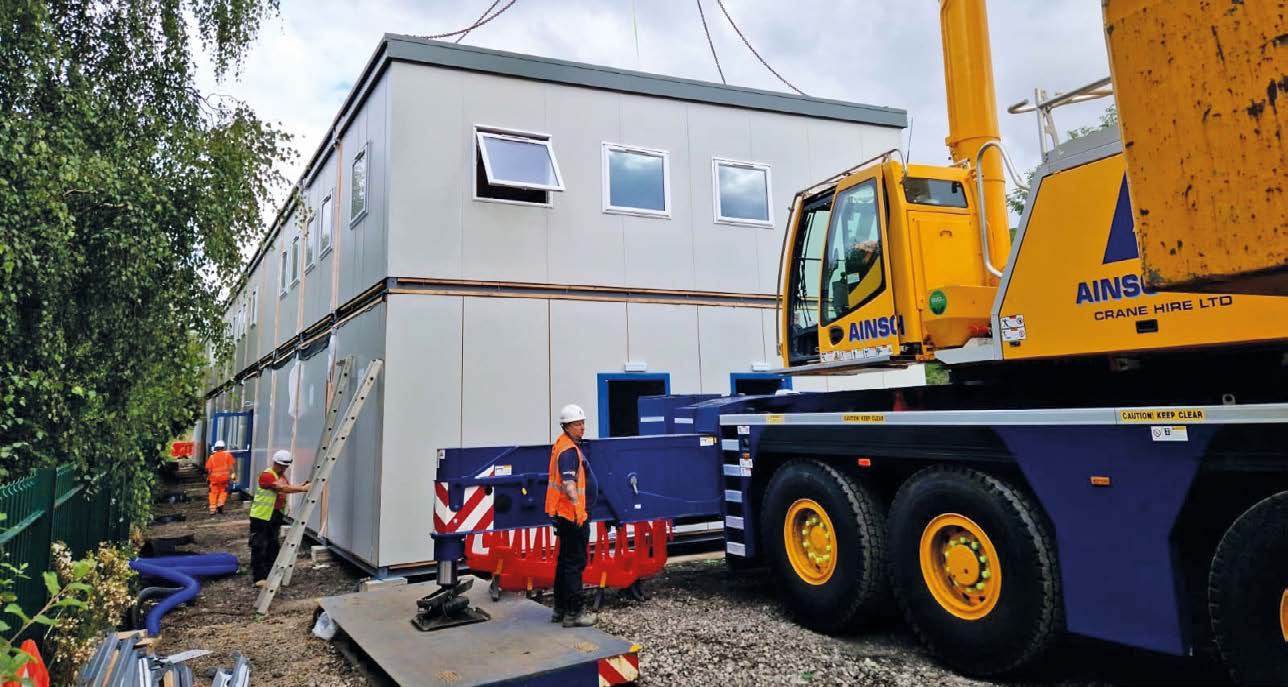
This is why so many of our members operate in sectors such as healthcare and education where modular approaches have been successfully used for decades. Leading modular manufacturers strive to develop long-term strategic relationships by developing skills and sector specialisms. A healthier pipeline of future work allows modular players to optimise their products and develop their production capabilities. For innovative construction methods to become a preferred alternative that can truly compete with traditional methods, strategic alignment between modular producers and construction clients, particularly in the public sector are mutually beneficial.
Streamline & standardise
The benefits of volumetric modular buildings come from the industrialisation of key construction tasks. MPBA members aim to standardise, streamline and automate major parts of the value chain. To get that right, modular companies need best-in-class manufacturing capabilities, including sophisticated digital design platforms and lean, efficient production lines.
Investment in digital technologies such as Artificial Intelligence (AI), the Internet of Things (IoT), 3D printing and real-time data analytics is happening at pace. It is standard practice for Building Information Modelling (BIM) to be embedded into the design and advanced manufacturing processes involved in modular construction. Increasing technological advancements coupled with the advantages provided by modular construction such as vastly reducing building schedules and cost without impacting on quality, together with sustainability gains such as reduction in construction carbon and material waste are contributing to demand in the commercial sector.
Evidencing value
Pre-Manufactured Value (PMV) is another driving force in the specification of volumetric technology in public projects – particularly in the healthcare and education sectors. PMV is a core metric for measuring the level of offsite in a project and is central to the UK government’s procurement programmes. To secure a contract, suppliers are required to show that pre-manufacturing will account for at least 70% of their construction cost, which plays to the strength of a volumetric modular approach. Since 2016 the BIM mandate has required UK public sector construction projects to use BIM technology.
This has helped speed up the pace of adoption during the design and construction phases. It has been predicted that government intervention around the ‘golden thread’ will accelerate things further. Central to the concept is guaranteeing the traceability and availability of project data and all decisions relating to the design, construction, safety performance and maintenance of the building.
The ‘thread’ involves the information handed over at the completion of a project which must be right from the start of client ownership and then must remain accurate throughout the building’s lifecycle. With traditional construction often key information such as product specification and maintenance details are not complete or accurate at the point of client handover which means the golden thread required for optimal running and safety cannot be achieved. As an established method of sharing building lifecycle data across design, construction and operation – BIM is also regarded as integral to achieving a golden thread.
Accurate and reliable data
With volumetric modular construction all data can be validated and coordinated as part of a structured process, which helps provide accurate and reliable information for clients at the point of handover. It also means it is easier to identify what products and material specifications were used on previous projects should any legislation changes occur.
With its powerful combination of controlled deliverables and customisable outputs, modular construction provides cost and time efficiencies together with the repeatable quality and safety – meeting the key drivers and stringent protocols demanded by the commercial sector.
MPBA
The MPBA plays a key role in the connecting of sectors in the modular and portable building industry. The association collaborates with specialist technical advisors to enhance innovation in the design and manufacture of modular buildings. These can be designed and manufactured from timber or steel in any size and shape to meet individual client needs while ensuring full compliance with Building Regulations.
To find out more visit: www.mpba.biz
Source: Offsite magazine issue 41