The Confederation of British Industry (CBI) has urged the government to make modern methods of construction (MMC) a requirement in future public-private partnership (PPP) models.
In a new report, the business group said PPPs provide “a strong platform” for the wider adoption of MMC and design for manufacture and assembly (DfMA), helping to speed up infrastructure delivery while reducing construction risk.
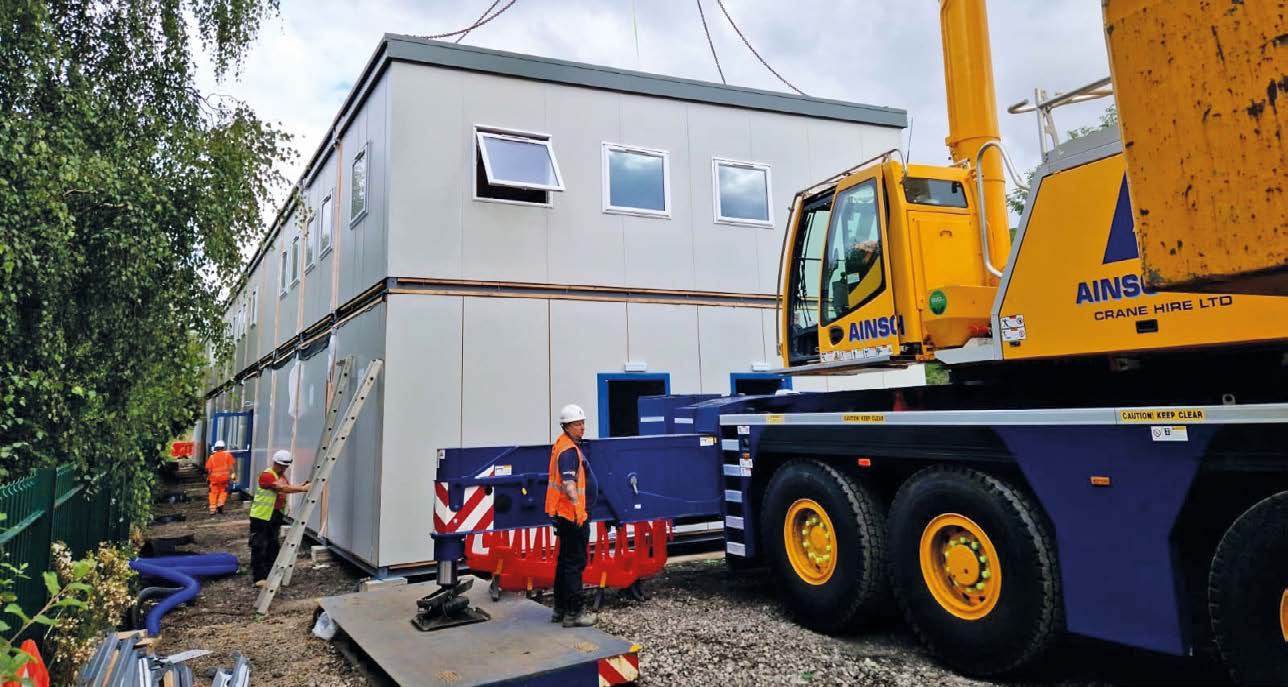
Using Laing O’Rourke’s industrialised construction programme as an example, the report highlighted how digitally designed buildings and standardised offsite-manufactured components could be applied across sectors including hospitals, schools, prisons and defence projects.
“This approach aligns closely with the long-term, programmatic nature of PPP pipelines,” the report, Pipeline to Progress: Making UK Infrastructure Investable, stated.
The report was produced in partnership with Browne Jacobson and launched yesterday (19 May) at the UK Real Estate Investment and Infrastructure Forum in Leeds.
According to the report, moving more work away from construction sites and into controlled manufacturing environments can help both public authorities and private investors by lowering risk, improving quality and creating greater cost certainty.
The CBI is calling on government to mandate platform compatibility and open digital standards rather than prescribing a single MMC solution, allowing suppliers to innovate while working within shared design rules that can operate across different systems.
It also wants standards to be introduced within nine months, followed by a phased platform adoption over the next 24 months.
Alongside this, the organisation is urging government and contracting authorities to create a more “disciplined” national PPP legal framework and to “embrace” the flexibilities introduced under the Procurement Act 2023 to encourage earlier contractor involvement.
“Rather than attempting to lock risk, design and price at the outset, procurements should embed predevelopment agreements, early contractor involvement and proof of concept stages within the PPP process itself,” the report said.
The CBI also stressed the importance of avoiding “returning to historic PFI [private finance initiative] models”, criticising older approaches that transferred risk to contractors “at all costs” through inflexible contracts.
Instead, the report advocates more transparent and collaborative partnerships backed by standardised contracts, open-book pricing and phased risk-sharing arrangements.
The UK government stopped using PFI and PF2 models for new infrastructure projects in 2018. However, there has recently been renewed political support for PPPs, particularly on revenue-generating schemes such as transport infrastructure, as a way to fund major civils projects within public spending constraints.
Last November, for example, the government confirmed that the PPP model would be used to deliver 250 Neighbourhood Health Centres across England, as well as the Lower Thames Crossing project.
CBI chief executive Rain Newton-Smith said: “The UK stands at an important moment for infrastructure. The ambition set out by government is clear and welcome.
“The challenge now is delivery: ensuring that plans translate into projects that can be built, operated and maintained at scale, and at pace. This report is grounded in a simple proposition: financing is not the constraint.
“What is constrained is priceable, patient capital aligned to delivery risk and pipeline certainty. The binding issue is whether the UK offers credible, investable propositions supported by consistent pipelines, clear risk allocation and professional stewardship over the life of assets.”