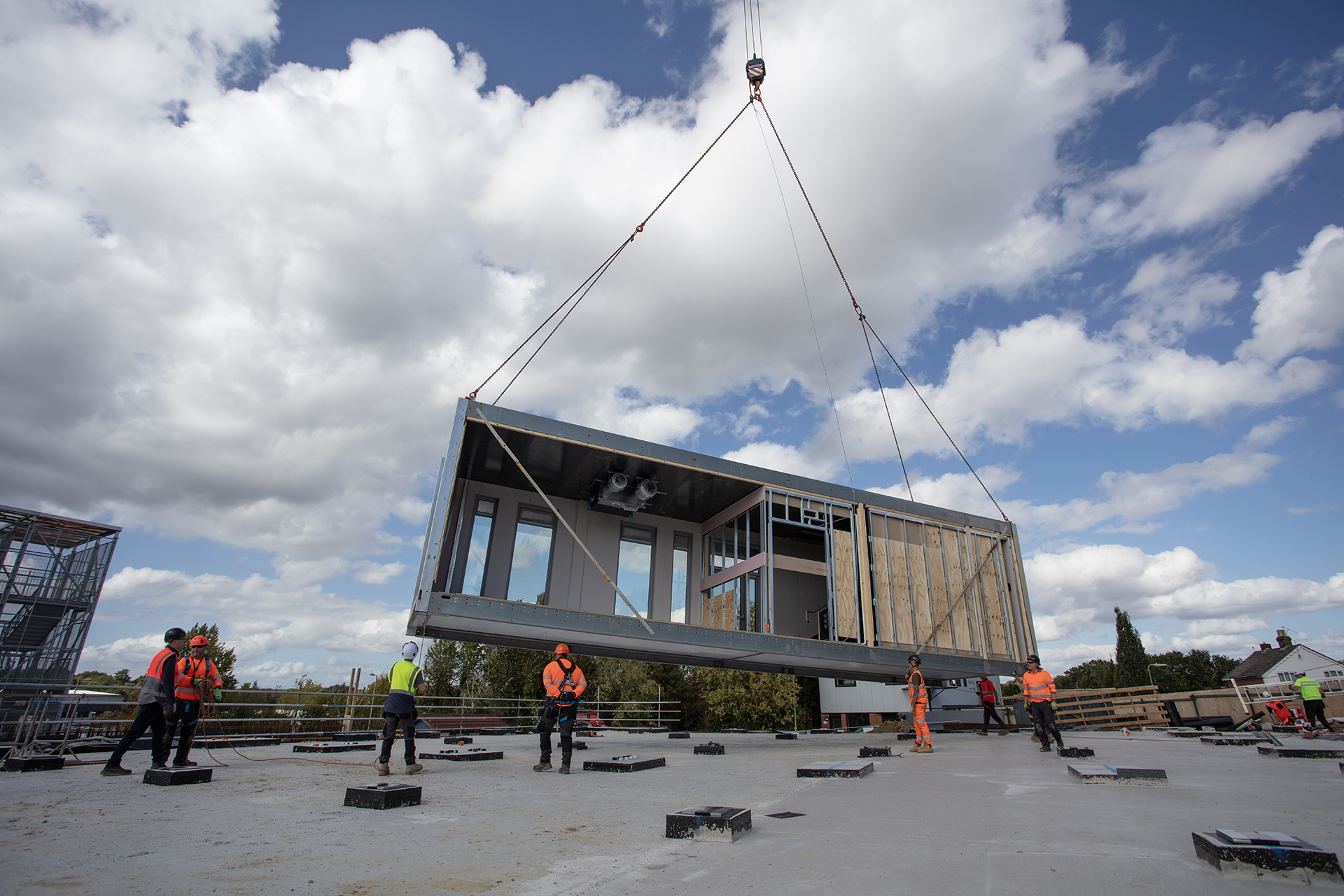
The built environment must decarbonise, cut waste and prove performance while still delivering the homes and infrastructure the UK needs – how can precast concrete strengthen the case for more sustainable offsite construction?
Precast Concrete is well placed to meet the sustainability challenge. As an established offsite solution, it combines factory-controlled production, quality assurance and transparent data. The soon to be published MPA Precast and MPA Masonry Sustainability Report, shows progress across carbon, circularity, responsible sourcing, water, waste and energy. Below is just a snapshot of this progress.
Factory control
Offsite construction is recognised for speed, productivity and programme certainty, however, factory-controlled production also allows materials, processes and outputs to be monitored closely, improving quality, reducing waste and managing energy use. The sector’s management systems reinforce this: 89% of factory output is covered by certified ISO 9001 and ISO 14001 systems.
Carbon reductions with evidence behind them
The reports carbon figures are significant for the offsite sector. Embodied carbon from factory emissions and raw materials fell from 200.8 kg CO₂e/m3 in 2018 to 162.6 kg CO₂e/m3 in 2024, a 19% reduction. Factory carbon emissions are 45% lower than in 2010, and 61.1% of member factory electricity came from renewables in 2024.
These reductions reflect investment in energy efficiency, renewable energy, cement decarbonisation and smarter mix design, including greater use of supplementary cementitious materials, or SCMs. SCMs accounted for 20.9% of binder content in 2024, an important trend with cementitious materials still representing 83% of the sector’s carbon footprint. In reinforced and structural precast, SCM use delivered embodied carbon savings of 66 kg CO₂e/m3 compared with 2016.
Circularity, data and local supply chains
Carbon is only part of the picture. Waste to landfill has fallen by more than 90% since 2012, with 99.5% of factory waste diverted from landfill in 2024. Secondary and recycled aggregates accounted for 12.7% of aggregates used, and water consumption fell to 120.5 litres per tonne of product. Factory production helps capture materials data, cut waste and improve consistency before products reach site. Environmental Product Declarations (EPD) strengthen that case – in 2024, 40% of manufacturers had developed EPDs covering 120 products, while more than 60% of member production was covered by sector EPDs. The report also highlights the importance of UK manufacturing and shorter supply chains. More than 69% of reinforcing steel used in UK precast concrete was sourced from UK mills.
A measurable route forward
There is still more ground to cover on the journey to net zero, particularly around cement decarbonisation, materials availability, transport emissions and lowcarbon technologies. But emissions are falling, data is improving, waste is reducing and responsible sourcing is becoming embedded. For the offsite sector, this matters. Precast provides a route to more measurable, repeatable and accountable construction. As clients demand lower-carbon buildings and infrastructure, high-quality sustainability data will become increasingly valuable.
The latest figures show precast concrete strengthening the sustainability case for offsite construction, turning ambition into measured progress. For over 15 years of precast and masonry sustainability reports visit: www.mpaprecast.org/Resources/Sustainability-reports.aspx